Introduction
Prop firms provide intermediate traders with structured access to capital through rigorous evaluation processes. A dedicated trading platform for prop firms serves as the operational backbone that supports these activities by delivering precise tools for performance measurement and risk control. This infrastructure enables traders to demonstrate consistency before advancing to funded status. The topic holds particular relevance because intermediate traders often seek reliable systems that align with firm requirements rather than generic retail solutions. Effective platforms reduce operational friction and support data-driven decision making. This article examines the operational elements of such platforms, the selection criteria that matter most, and the practical advantages they deliver in real trading environments. Readers will gain clarity on how these systems function within prop firm models and how to evaluate options based on measurable criteria.
The Functionality of Prop Trading Software
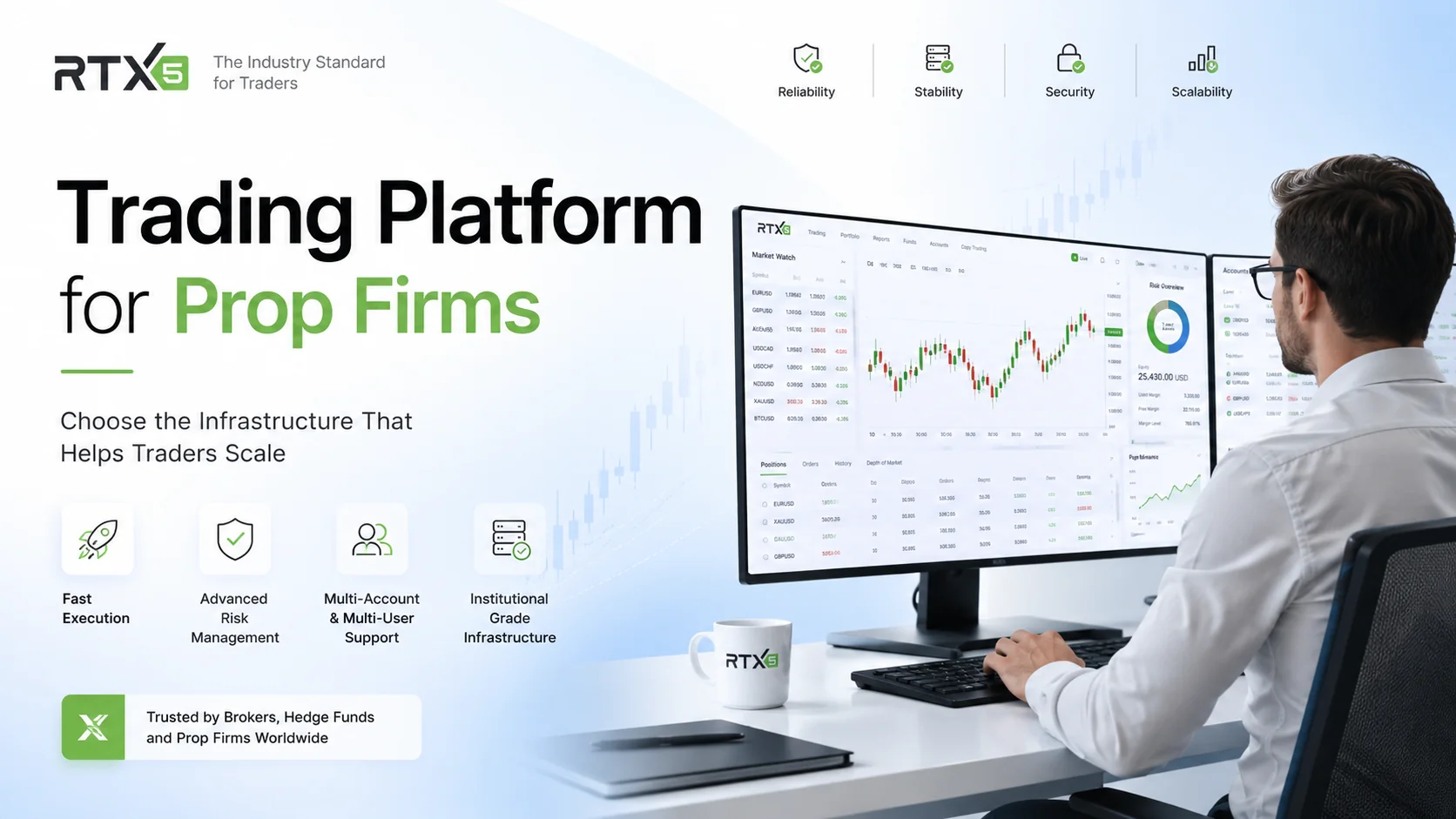
Prop trading software coordinates the entire workflow from initial account setup through ongoing performance monitoring. It processes trade data in real time and applies firm-specific rules without manual intervention. Intermediate traders benefit from automated tracking that records metrics such as profit targets, drawdown limits, and consistency scores. The software also generates reports that firms use to decide whether a trader advances to a funded trader platform. Integration with multiple asset classes allows users to operate across forex, futures, and equities within a single interface. This centralization reduces errors that arise when traders switch between disconnected tools. Firms rely on these systems to maintain compliance while scaling their trader pools efficiently. Real-world deployment shows that platforms with strong backend analytics shorten evaluation cycles by several weeks compared with manual review methods.
Key operational modules include order execution engines, risk parameter enforcement, and account progression tracking. Traders interact with dashboards that display live statistics and historical performance curves. Notifications alert users when they approach defined thresholds, which helps maintain discipline during evaluation phases. Data export functions support external analysis when required by firm auditors. These features collectively create an environment where evaluation trading platform standards are applied uniformly across all participants.
Criteria for Choosing an Evaluation Trading Platform
Selection begins with verification that the platform enforces the exact rules of the target prop firm. Intermediate traders should examine latency figures, execution reliability, and available instruments before committing. A robust trading platform for funded accounts must demonstrate uptime exceeding 99.9 percent during market hours. Compatibility with common charting packages and third-party indicators further streamlines workflow. Security protocols, including two-factor authentication and encrypted data transmission, protect both trader and firm capital. Pricing structures that scale with account size allow traders to test smaller evaluations before moving to larger allocations. Support responsiveness during active trading hours ranks as another decisive factor, since delays can affect evaluation outcomes.
- Rule synchronization with firm guidelines to avoid disqualification
- Real-time risk monitoring with customizable alerts
- Comprehensive reporting that matches firm audit requirements
- Multi-device access for traders who operate across locations
- Transparent fee schedules without hidden charges
Case studies from established prop firms indicate that platforms meeting these criteria retain higher trader completion rates. Intermediate users who prioritize these elements report smoother transitions from evaluation to funded status. Thorough due diligence at this stage prevents costly platform switches later in the process.
Implementation in Trading for Funded Accounts
Once evaluation requirements are met, the same infrastructure transitions traders into funded trader platform operations. Capital allocation occurs automatically, and profit splits are calculated according to predefined agreements. The platform continues to apply risk parameters to protect firm capital while allowing traders greater flexibility. Performance analytics remain active, enabling both parties to identify patterns that influence long-term account growth. Intermediate traders gain access to larger position sizes only after demonstrating sustained compliance within the system. This staged approach minimizes firm exposure while rewarding consistent execution. Integration with payment processors ensures timely disbursement of trader shares without manual reconciliation.
Practical application reveals that traders who maintain detailed logs within the platform achieve better capital preservation. Regular review of platform-generated statistics supports strategy refinement. Firms that standardize on one evaluation trading platform across all desks experience lower administrative overhead. These operational efficiencies translate into faster scaling for successful participants. The continuity between evaluation and funded phases reduces learning curves and preserves trader momentum.
Conclusion
Prop trading software, evaluation trading platforms, and trading platforms for funded accounts form an integrated system that supports trader progression. Intermediate traders who focus on rule alignment, execution quality, and reporting depth position themselves for successful advancement. Selecting the appropriate funded trader platform ultimately determines both evaluation outcomes and long-term account performance. Review available solutions and compare their specifications against your target prop firm requirements.