Introduction
Modern trading is no longer defined by manual execution or screen-based decision-making. The real edge lies in automated systems that can analyze data, execute logic, and manage risk with precision and speed.
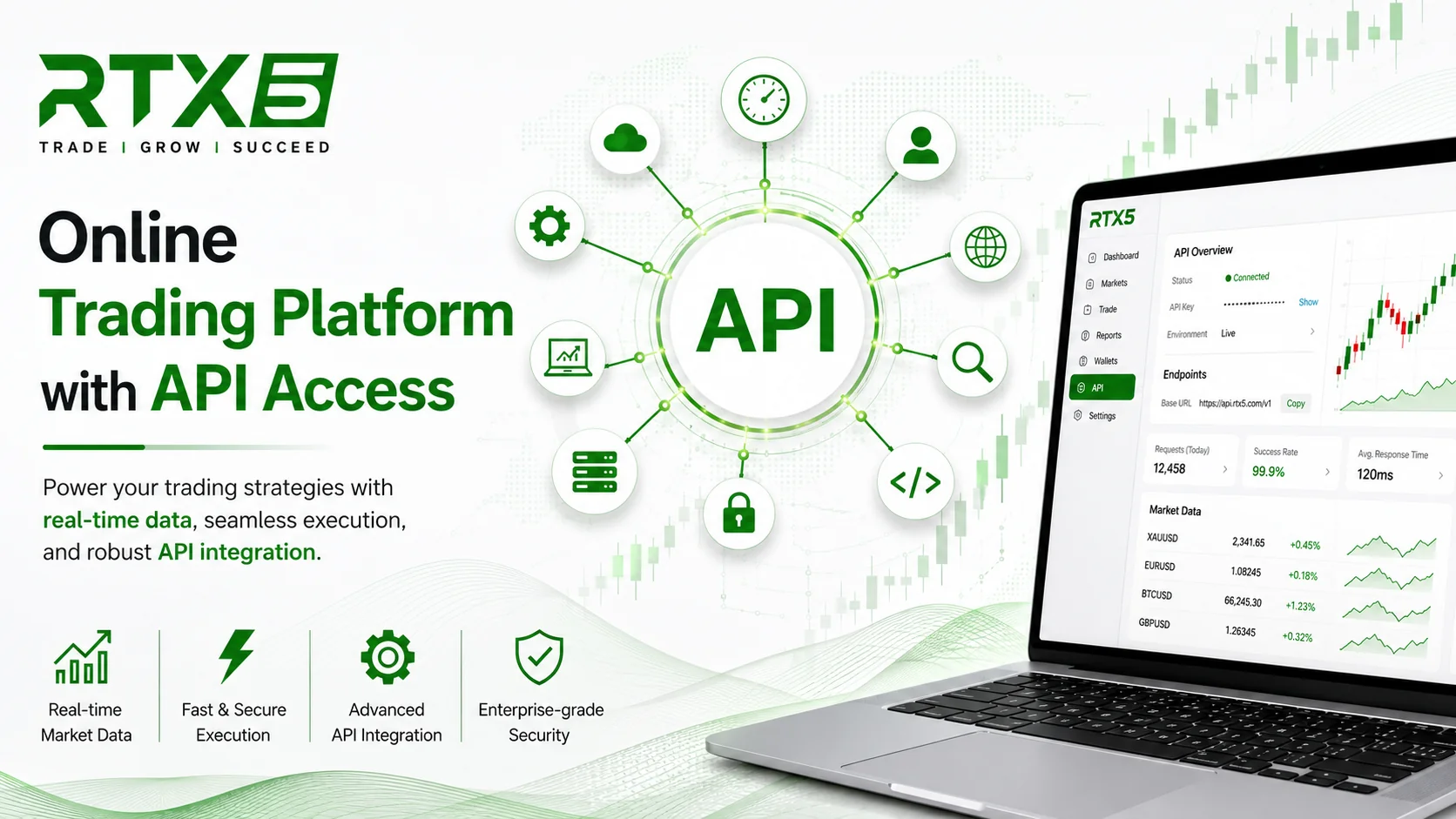
An online trading platform with API access acts as the core infrastructure for this evolution, enabling direct connectivity between trading strategies and market execution. Through a REST API for trading, traders can integrate custom models, automate workflows, and build scalable algorithmic systems that operate with consistency and efficiency.
Evaluating a Broker API Trading Environment
Choosing the right broker API setup is a technical decision, not just a trading preference. The infrastructure determines how reliably your strategy performs in live markets.
Key areas to evaluate:
-
Latency Performance
Lower latency means faster execution and reduced slippage, especially during volatility. -
Rate Limits
Understand how many requests per second are allowed to avoid strategy breakdowns during high activity. -
Server Proximity
Co-located servers near exchanges improve execution speed and stability. -
Sandbox Testing Environment
A must-have feature to test strategies safely using simulated funds. -
Documentation Quality
Clear API docs reduce development errors and speed up integration.
A strong trading platform API acts as the backbone of any serious automated trading system.
Technical Anatomy of a REST API for Trading
A REST API for trading uses standard web protocols to connect your strategy with market infrastructure.
Core working structure:
- GET requests → Fetch market data like price, volume, and spreads
- POST requests → Place new orders
- DELETE requests → Cancel open orders
Security is handled using:
- HTTPS encryption (TLS 1.2 or higher)
- API key authentication
- HMAC signature verification for secure order validation
Typical workflow in an algorithm:
- Fetch live market data
- Analyze conditions (spread, volatility, trend)
- Generate trade signal
- Send signed order request to broker API
- Monitor execution and manage risk
A reliable algorithmic trading API ensures:
- Consistent JSON responses
- Clear error handling
- Stable order execution flow
Key Takeaways
- A strong API trading system improves speed and precision
- Security (HMAC + API keys) is essential for safe execution
- Sandbox testing is mandatory before live deployment
- Latency and rate limits directly impact strategy performance
- Structured JSON responses improve automation reliability
FAQ
Q1: What is a REST API for trading?
It is a system that allows traders to connect automated scripts directly to broker infrastructure for executing trades programmatically.
Q2: Why is API access important for trading platforms?
It enables automation, faster execution, and integration of custom trading strategies without manual intervention.
Q3: What are rate limits in trading APIs?
Rate limits define how many requests your system can send per second to prevent overload and ensure platform stability.
CTA
Start building smarter trading systems by exploring an online trading platform with API access that supports automation, speed, and secure execution.
Test your strategies in a sandbox environment before going live and refine your system step by step for better consistency.