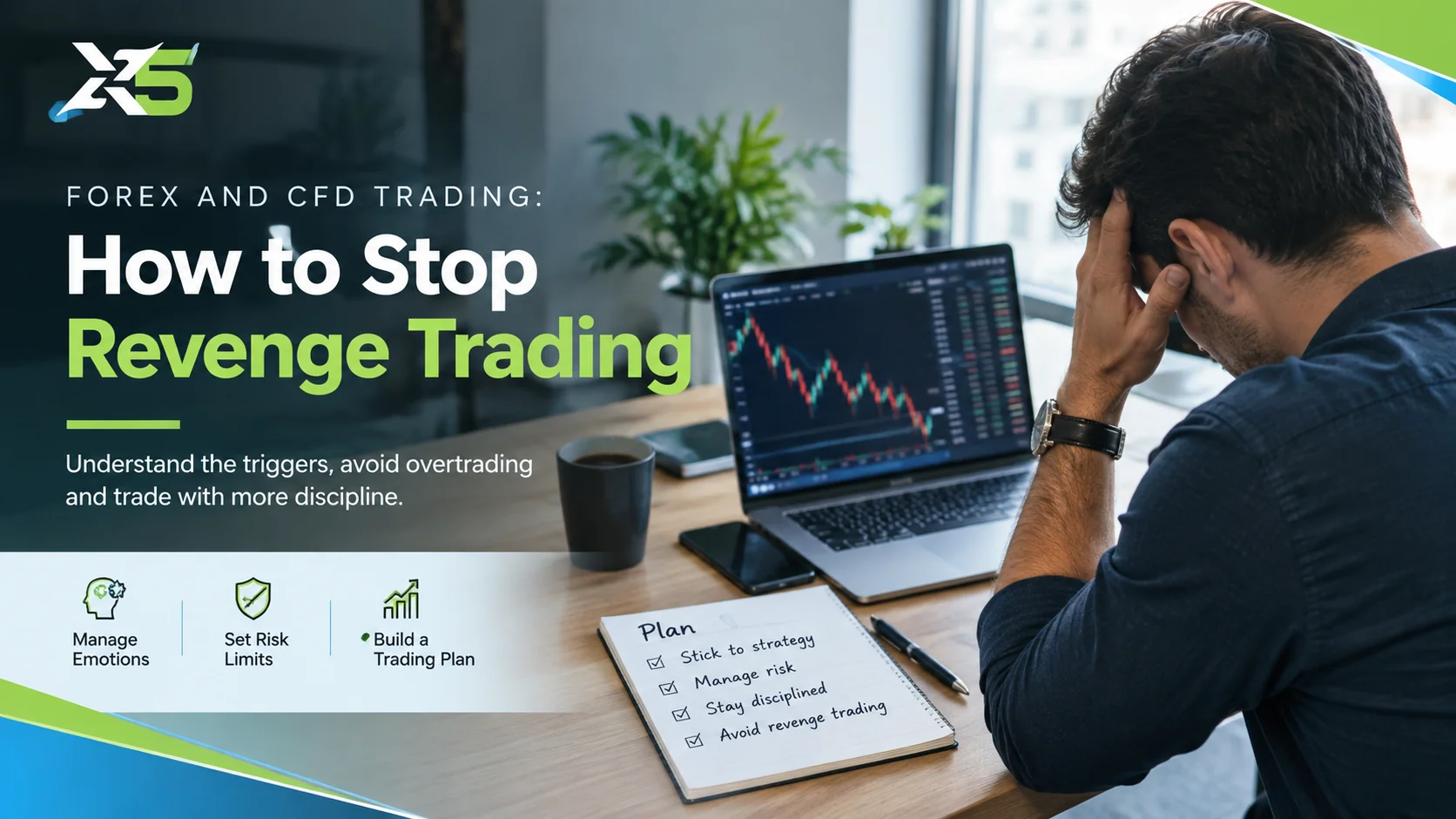
Risk management and trading psychology are interconnected disciplines: risk management sets quantitative rules for capital preservation, while trading psychology determines whether a trader can follow those rules under pressure. Research shows emotions are active forces influencing judgment, and overconfidence can increase the likelihood of excessive trading. No single framework eliminates risk entirely. risk management & trading psychology.
Key Takeaways
- Position sizing is a fundamental pillar of risk management and long-term trading success.
- Emotions like fear and overconfidence directly drive biased trading decisions.
- Hard stop-loss orders outperform mental stops under stress for most retail traders.
- Combining multiple risk frameworks outperforms relying on any single approach.
- Overestimation of one's own performance is linked to excessive trading risk.
Risk management & trading psychology: definition and decision context
Risk management in trading refers to the systematic process of identifying, measuring, and controlling exposure to loss on every trade. Trading psychology is the emotional and cognitive dimension that determines whether a trader actually executes their plan. Position sizing is a fundamental pillar of risk management and long-term trading success, and choosing between frameworks like fixed-fractional and Kelly Criterion is a strategic decision with real-world impact [8].
By capping the risk per trade as a fixed percentage of a portfolio, the fixed-fractional method helps ensure that no single loss can endanger trading longevity [8]. However, the psychological challenge is actually following through on these rules when real capital is at stake. Traders looking for a Platform overview should evaluate whether their terminal supports built-in risk controls that enforce discipline mechanically.
Who should consider risk management & trading psychology?
Every trader — from beginners placing their first forex trade on an Android app to experienced scalpers running high-frequency strategies — should build risk management into their workflow. Successful trading requires combining multiple risk management frameworks rather than relying on a single isolated approach [6].
The fixed-fractional model, such as the widely cited 1–2% rule, provides critical capital preservation during drawdowns but ignores prevailing market volatility [6] . Volatility scaling using Average True Range dynamically adjusts position sizes to equalize risk across assets, though its backward-looking nature leaves it vulnerable to sudden regime shifts [6] . Traders who combine these approaches with psychological discipline are better positioned to manage drawdowns across forex, stocks, indices, and crypto markets (2026). Source: Is Overconfidence a Risk Factor for Excessive Trading? | Journal of Gambling Studies | Springer Nature Link (2026).
Benefits and practical limitations
Integrating behavioral awareness with quantitative risk controls provides measurable benefits, but the approach has clear limitations. Research integrating behavioral finance theory with empirical-style analysis shows that emotions, risk management practices, and trader characteristics all affect trading outcomes [7].
A key benefit is that structured risk rules — such as pre-set stop-losses — act as commitment devices. Stop-loss execution research draws from behavioral economics work on commitment devices and present-bias, particularly loss aversion documented by Kahneman and Tversky [3]. A practical limitation is that mental stops, which many traders prefer because they feel sophisticated, tend to produce systematic compliance failures under stress [3]. For traders using Web trading terminals, built-in hard stop-loss order types can help enforce discipline mechanically.
Forex trading app Android and the reader decision
Forex trading app Android and the reader decision: Is Overconfidence a Risk Factor for Excessive Trading.
Whether trading on desktop or through a forex trading app on Android, the software a trader uses directly impacts their ability to enforce risk management rules. Robust risk management software is foundational for mitigating volatility, ensuring compliance, and executing trading strategies consistently [4].
When evaluating a scalping trading app or any mobile platform, traders should verify that the app supports hard stop-loss orders, position-size calculators, and real-time margin monitoring. The choice of tool directly impacts operational efficiency [4]. Platforms that offer integrated Charts with risk overlays help traders visualize exposure before entering a position, which reduces reliance on willpower alone.
Scalping trading app and the reader decision
Scalping demands rapid decision-making, which amplifies the impact of emotional bias. A scalping-focused trading app must pair fast execution with equally fast risk enforcement. Common risk management frameworks — including the 1–2% rule, fixed-fractional sizing, and ATR-based stops — can each be adapted for short-timeframe scalping strategies [6] (2025). Source: Investor Emotions and Cognitive Biases in a Bearish Market Simulation: A Qualitative Study (2025).
Comfort with volatility and drawdown should determine whether a scalper leans toward the steady, measured risk of fixed-fractional sizing or pursues more aggressive, edge-driven growth with a Kelly-based approach [8]. Estimating win probabilities and payoffs in live scalping environments is notoriously difficult, which is why many traders opt for "fractional Kelly" to capture some growth advantage while reducing risk [8].
Overconfidence and its role in excessive trading
Overconfidence is one of the most researched psychological biases affecting risk management. A 2026 study in the Journal of Gambling Studies investigated the relationship between overconfidence in simulated financial decision-making and the likelihood of excessive trading among individual investors [1].
The study found that overestimation — the tendency to believe one's performance is better than it actually is — distinguishes investors with low risk of excessive trading from those at moderate-to-high risk [1]. A separate qualitative study confirmed that early trading successes sometimes generated happiness and pride but also resulted in overconfidence and excessive risk-taking [2]. Traders can counter this bias by maintaining a trade journal, using rule-based position sizing, and reviewing their Download-able terminal's trade history logs regularly.
This article is for general information only and is not financial advice. Trading, automation, and broker decisions involve capital at risk, risk of loss, and possible loss of capital. Past performance, simulated examples, and backtest references are not indicative of future results.
Sources
- Is Overconfidence a Risk Factor for Excessive Trading? | Journal of Gambling Studies | Springer Nature Link
- Investor Emotions and Cognitive Biases in a Bearish Market Simulation: A Qualitative Study
- Hard Stop vs Mental Stop: When to Use Each (Data)
- Best Risk Management Trading Software – 2026 Buyer's Guide
- Behavioral Biases in Prop Trading | AI Prop Research on Trader Psychology
- Comparison of Risk Management and Position Sizing Frameworks
- (PDF) Behavioral Biases and Trading Performance: Evidence from Retail Forex Traders
- Fixed Fractional vs Kelly Criterion: Best Trade Sizing Strategies Compared - The Trading Dojo
Related: Technical analysis.
Related: How to connect.
Related: RTX5 IDE.
Related: Robots & indicators.
Related: VPS.
Related: Mobile trading.