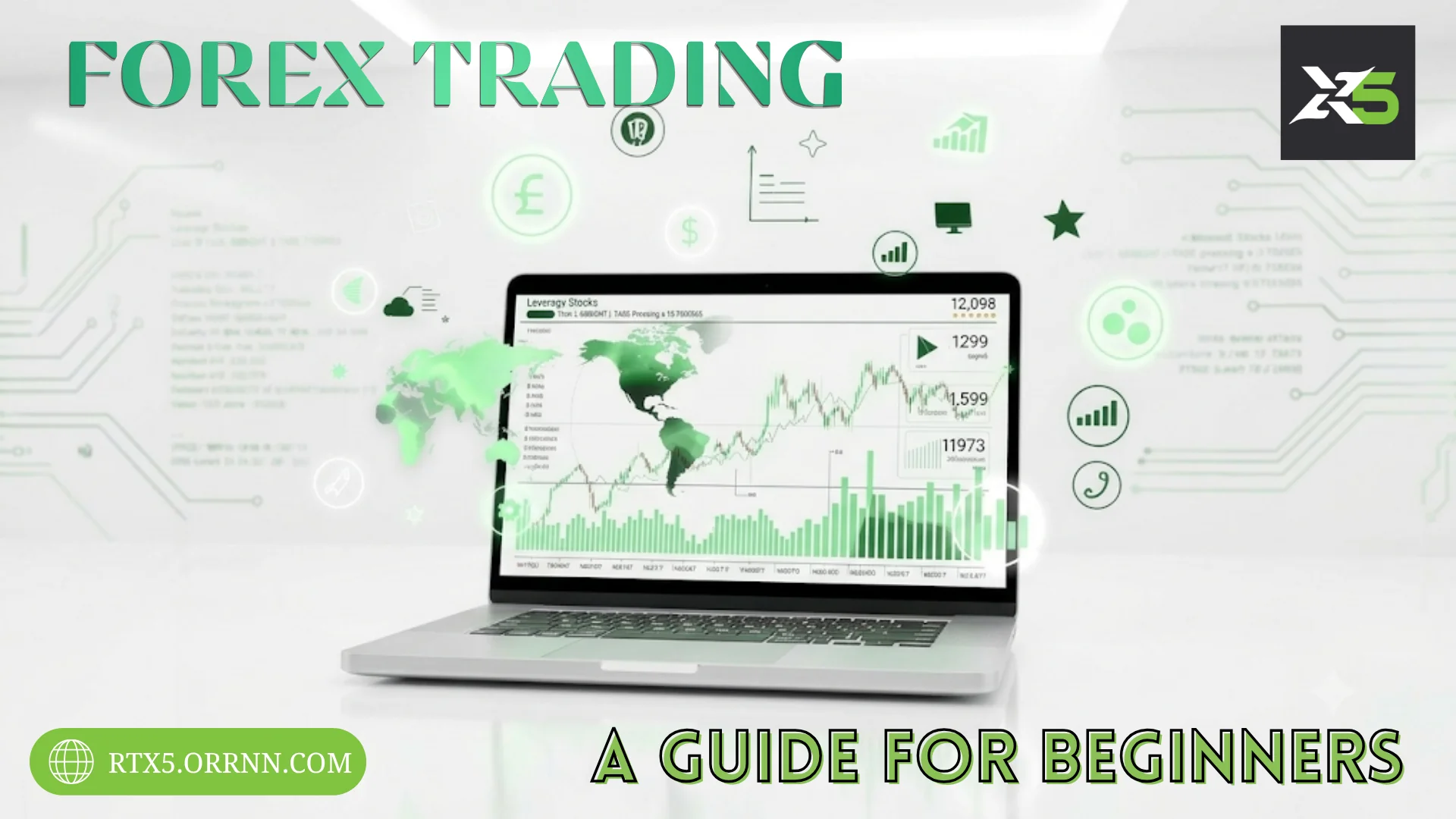
Foreign exchange (Forex or FX) trading is the decentralized global marketplace where national currencies are bought, sold, and exchanged. With daily trading volume exceeding $7.5 trillion, it is the largest and most liquid financial market in the world.
Unlike central stock exchanges, Forex operates as an Over-The-Counter (OTC) market across major financial hubs—London, New York, Tokyo, and Sydney—allowing continuous trading 24 hours a day, 5 days a week.
Whether you plan to speculate on short-term exchange rate movements or build automated trading strategies, understanding how the FX market operates is your essential first step.
Key Takeaways
Core Mechanism: Forex involves exchanging base currencies against quote currencies in pairs (e.g., EUR/USD).
Execution Layer: Modern trading relies on low-latency infrastructure, bridging retail flow to institutional liquidity pools.
Mobile Accessibility: Cross-platform terminals allow complete position management via smartphone and web interfaces.
Risk Management: Leverage amplifies both gains and losses; setting mandatory stop-loss orders and managing margin is non-negotiable.
How Forex Trading Works: Mechanics & Pairs
In Forex trading, currencies are always priced in pairs. When you enter a position, you simultaneously purchase one currency while selling another.
Base Currency: The first currency listed in the pair (e.g., EUR in EUR/USD).
Quote Currency: The second currency, which indicates how much of it is required to buy one unit of the base currency (e.g., USD in EUR/USD).
If EUR/USD is quoted at 1.0850, it takes $1.0850 to purchase €1.00. If you anticipate the Euro strengthening against the Dollar, you buy (go long). If you expect the Euro to weaken, you sell (go short).
Bid, Ask, and the Spread
Trading platforms display two prices for any currency pair:
Bid: The price at which the market (or your broker) is willing to buy the base currency from you.
Ask: The price at which the market will sell the base currency to you.
Spread: The difference between the Bid and Ask prices, measured in pips (Percentage in Point, usually the 4th decimal place).
Key Terms Every Beginner Must Know
To navigate order routing and execution smoothly, you need to master four fundamental concepts:
Pips: The standard unit of measurement for exchange rate movements. A shift in EUR/USD from
1.0850to1.0851represents a 1-pip movement.Lots: Positions are traded in standardized quantities. A Standard Lot is 100,000 units, a Mini Lot is 10,000 units, and a Micro Lot is 1,000 units.
Leverage: A mechanism enabling traders to control larger market positions with a smaller upfront capital deposit (margin). While 1:100 leverage allows $1,000 to control a $100,000 position, excess leverage increases liquidation risk under extreme volatility.
Slippage: The difference between your expected execution price and the actual fill price, typically occurring during high-impact news events or thin market depth.
How to Start Forex Trading Online: Step-by-Step
Choose a trading environment that offers high-speed execution, minimal latency, and robust charting. Modern solutions like RTX5 or legacy platforms (MetaTrader 4/5, cTrader) provide the core interface connecting your terminal to liquidity providers.
2.Open a Forex Trading Account:Broker registration & KYC.Register with a regulated broker. Complete identity verification (KYC) and select your account type—standard spread-based accounts or ECN accounts featuring raw spreads and fixed commissions.
3.Practice on a Demo Account:Risk-free execution.Before risking capital, test your strategy in a sandbox environment. Evaluate fill speeds, practice setting stop-loss orders, and analyze depth-of-market metrics without financial risk.
4.Fund and Execute Live Trades:Capital allocation.Deposit funds using secure payment gateways. Use strict risk management: never risk more than 1–2% of your total account equity on a single position.
Desktop vs. Mobile: How to Start Forex Trading by Phone
Modern trading infrastructure has eliminated the gap between workstation terminals and mobile devices.
While heavy technical analysis, multi-chart layout monitoring, and algorithmic strategy development (using MQL5 or native C# IDEs) are best suited for desktop terminals, mobile apps handle real-time execution flawlessly.
| Feature | Desktop Trading Terminal | Mobile Trading App |
| Best For | Multi-chart analysis, EA/Robot backtesting, Depth of Market | On-the-go execution, position monitoring, instant alerts |
| Execution | Ultra-low latency, direct API integration | High-speed execution over 5G/Wi-Fi |
| Charting | Unlimited indicators, custom drawing tools, multi-monitor | Optimized single-chart layouts, quick order entry |
To start Forex trading by phone:
Download your broker's terminal app (e.g., RTX5 or MetaTrader mobile).
Log in using your secure Forex trading account credentials.
Enable biometric authentication and set up push notifications for high-impact economic news releases and margin level alerts.
Evaluating Infrastructure: MetaTrader vs. cTrader vs. RTX5
When evaluating platforms, the terminal you choose dictates your execution speed, charting flexibility, and automated trading capabilities.
MetaTrader 4/5 (MT4/MT5): The legacy industry standard. Highly accessible with a vast third-party library of Expert Advisors (EAs), though constrained by aging interface architecture and proprietary MQL languages.
cTrader: Known for a clean user interface and cBot development in C#. Popular among direct ECN brokers, though ecosystem add-ons remain smaller than MetaTrader's.
NinjaTrader: Excellent for futures and technical analysis, but heavily optimized for US centralized exchanges rather than global OTC Forex market routing.
RTX5 Terminal: Built for latency-obsessed modern multi-asset markets. Integrates native REST/WebSocket APIs, built-in cloud Strategy Testers, and direct ECN liquidity aggregation—giving both retail traders and institutional brokers an ultra-fast execution engine across desktop, web, and mobile.
Frequently Asked Questions
What is forex trading and how does a beginner start?
Forex trading is the exchange of global currencies for profit. Beginners start by learning currency pair mechanics, opening a demo account with a regulated broker, practicing risk management, and transitioning to a live trading account once consistent.
How much money do I need to start forex trading online?
Many brokers allow micro-account setups starting at $50 to $100. However, proper risk management requires adequate capitalization so individual position risk remains under 1–2% of total equity.
Can I trade Forex using only my phone?
Yes. Full-featured mobile trading terminals allow you to execute market and pending orders, monitor live prices, view charts, and manage account margin directly from iOS and Android devices.