Understanding trading costs is one of the first steps toward becoming a more informed forex trader. While beginners often focus on market direction and profit potential, experienced traders know that even small transaction costs can influence overall trading performance.
One of the most important concepts to understand is the pip spread. Whether trading major currency pairs or commodities like gold, the spread represents the initial cost of entering a position. Knowing how pips are measured, how spreads are calculated, and how pip values affect profit and loss helps traders make more informed decisions.
This guide explains what is a pip spread, how pips work across different markets, and why understanding them is essential for both traders and brokers.
Key Takeaways
A pip is the standard unit used to measure price movement in most forex currency pairs.
The spread is the difference between the bid and ask price, measured in pips.
Pip value depends on the currency pair, trade size, and account currency.
Gold and other commodities use different price increments than currency pairs.
Understanding pips and spreads helps traders estimate trading costs before placing an order.
What Is a Pip in Forex?
Before understanding a pip spread, traders should first understand what is a pip in forex.
A pip (Percentage in Point) is the smallest standardized price movement for most currency pairs.
For most forex instruments:
1 pip = 0.0001
Example:
EUR/USD moves from 1.1000 to 1.1001
The movement equals 1 pip
For Japanese Yen (JPY) pairs, pricing uses two decimal places.
Example:
USD/JPY moves from 145.20 to 145.21
The movement equals 1 pip
Although modern trading platforms often display fractional pricing (pipettes), the standard pip remains the primary unit traders use to measure market movement.
What Is a Pip Spread?
The primary keyword many traders search for is what is a pip spread.
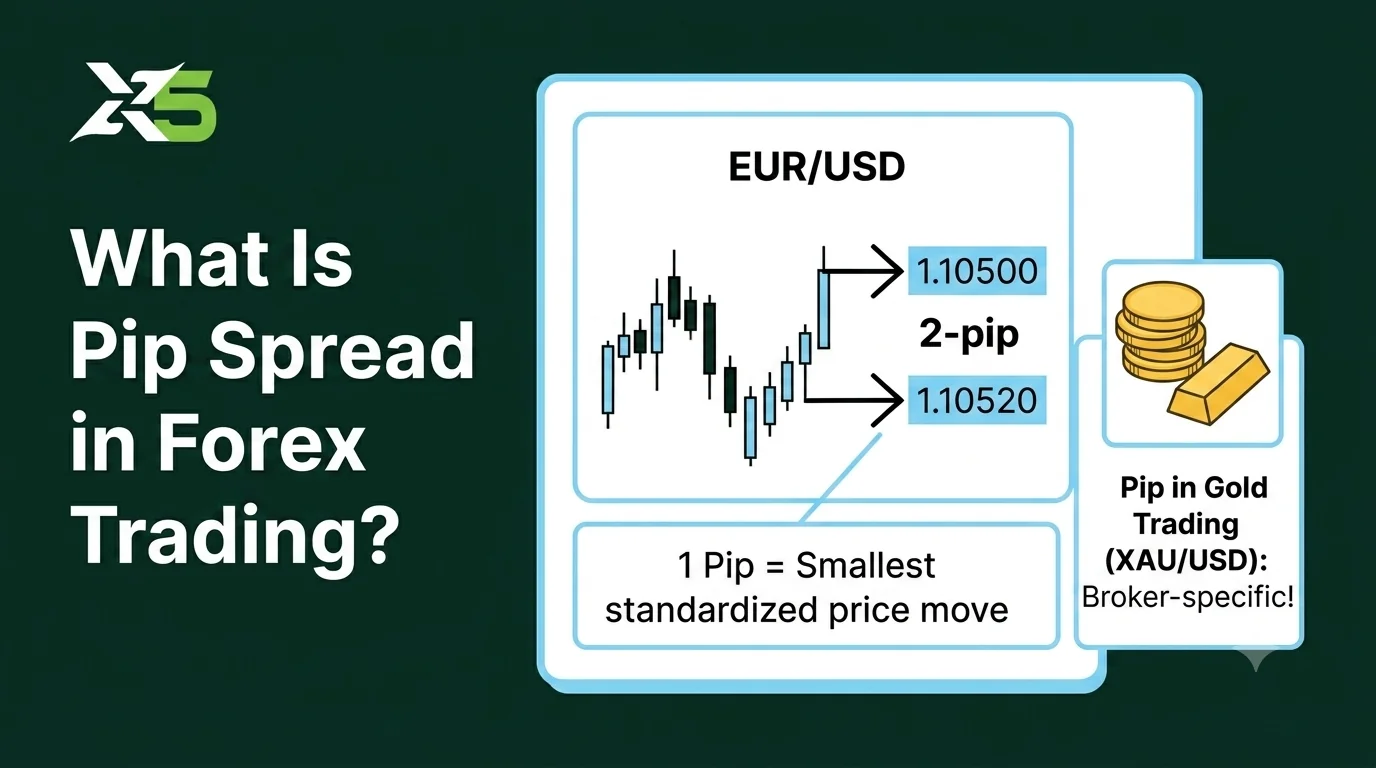
A pip spread is the difference between the buying price (Ask) and selling price (Bid), expressed in pips.
For example:
| Bid Price | Ask Price | Spread |
|---|---|---|
| 1.10500 | 1.10520 | 2 pips |
If a trader buys EUR/USD at 1.10520, the position immediately reflects the spread cost. The market must move at least two pips in the trader's favor before the trade reaches break-even, excluding any commissions or swap fees.
This spread is one of the most common transaction costs in forex trading.
Pips Meaning in Trading
The pips meaning in trading extends beyond measuring price movement. Pips are used to calculate:
Trading profits
Trading losses
Stop-loss distance
Take-profit targets
Spread costs
Risk-to-reward ratios
For example:
A trader enters EUR/USD at 1.1000 and exits at 1.1035.
Price movement:
35 pips
Rather than discussing decimal price differences, traders communicate movements in pips because they provide a standardized measurement across currency pairs.
What Is Pips in Forex Trading with Example?
To better understand what is pips in forex trading with example, consider the following scenario.
Suppose a trader buys GBP/USD at:
1.2800
The market later rises to:
1.2835
Price movement:
35 pips
If the trader's strategy targeted 30 pips, the trade exceeded its intended profit objective.
Similarly, if the market had fallen to 1.2780, the trader would have experienced a 20-pip loss.
This standardized measurement makes it easier to compare performance across different currency pairs.
How Much Is 1 Pip in Forex?
Many beginners ask, how much is 1 pip in forex.
The answer depends on several factors:
Currency pair
Trade size (lot size)
Account currency
Exchange rate
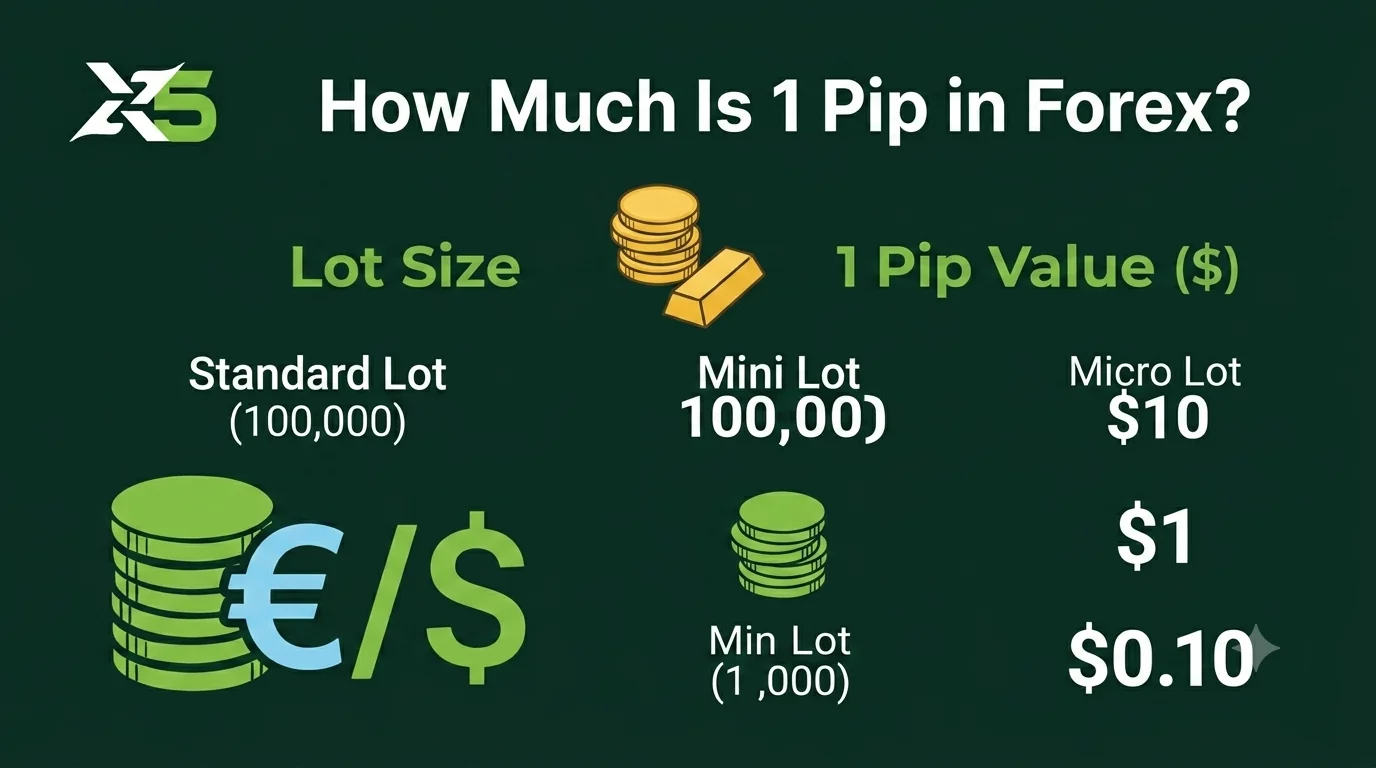
For a standard lot (100,000 units) in USD-quoted major pairs:
| Lot Size | Approximate Value of 1 Pip |
|---|---|
| Standard Lot (100,000) | $10 |
| Mini Lot (10,000) | $1 |
| Micro Lot (1,000) | $0.10 |
These values may vary slightly depending on the currency pair and prevailing exchange rates.
Understanding pip value allows traders to determine the monetary impact of every price movement before opening a position.
1 Pip Is Equal to How Many Dollars?
A closely related question is 1 pip is equal to how many dollars.
There is no single universal answer because pip value changes according to trade size and currency pair.
For example:
EUR/USD
Standard Lot
1 pip ≈ $10
Mini Lot
1 pip ≈ $1
Micro Lot
1 pip ≈ $0.10
If a trader gains 50 pips while trading one standard lot of EUR/USD:
50 × $10 = $500
This calculation helps traders estimate both potential profits and maximum acceptable losses when defining risk parameters.
What Is Pips in Gold Trading?
Unlike forex currency pairs, gold uses different pricing conventions.
Understanding what is pips in gold trading requires recognizing that many brokers quote gold (XAU/USD) with varying decimal precision.
For example:
Gold price:
3350.20
3350.30
Many trading platforms would interpret this movement as 10 points, while others may define it as 1 pip, depending on the broker's pricing format.
Because quoting conventions differ, traders should always review their trading platform's contract specifications before calculating pip values for gold or other commodities.
Rather than assuming every instrument follows forex pricing rules, it is good practice to verify the minimum price increment for each market.
Why Pip Spreads Matter
Even relatively small spreads can have a meaningful impact on trading performance over time.
For example:
A trader places:
15 trades per day
Average spread: 2 pips
That results in 30 pips of spread cost per trading day before considering commissions or overnight financing charges.
This is why professional traders often evaluate:
Average spread
Market liquidity
Execution quality
Order speed
Total trading cost
instead of focusing on spreads alone.
Trading platforms that provide transparent pricing, advanced order management, and professional execution tools compared to other options in the market help traders assess these costs more effectively.
Practical Tips for Managing Spread Costs
Although spreads cannot be eliminated, traders can reduce their impact by following several best practices:
Trade during high-liquidity market sessions when spreads are generally tighter.
Avoid opening positions immediately before major economic announcements.
Consider the total execution cost, including commissions and swap fees.
Use appropriate position sizing based on pip value and account risk.
Review instrument specifications before trading currencies, commodities, or precious metals.
A disciplined approach to managing transaction costs contributes to more consistent trading outcomes over the long term.
Conclusion
Understanding what is a pip spread is fundamental for anyone participating in forex or commodity markets. A pip measures price movement, while the spread represents the cost of entering a trade. Together, they play a critical role in determining trading profitability, risk management, and execution efficiency.
By learning what is a pip in forex, how much is 1 pip in forex, 1 pip is equal to how many dollars, what is pips in forex trading with example, pips meaning in trading, and what is pips in gold trading, traders can make more informed decisions and better estimate the true cost of every trade.
Whether trading short-term market movements or managing longer-term positions, understanding pips and spreads provides a stronger foundation for building disciplined trading strategies and evaluating trading conditions with confidence.