Why Modern Traders Are Switching to Multi Asset Trading Terminals
Financial markets have evolved significantly over the past decade. Traders are no longer limited to focusing on a single asset class. Today, opportunities exist across stocks, forex, commodities, indices, and cryptocurrencies, often moving simultaneously in response to global economic events.
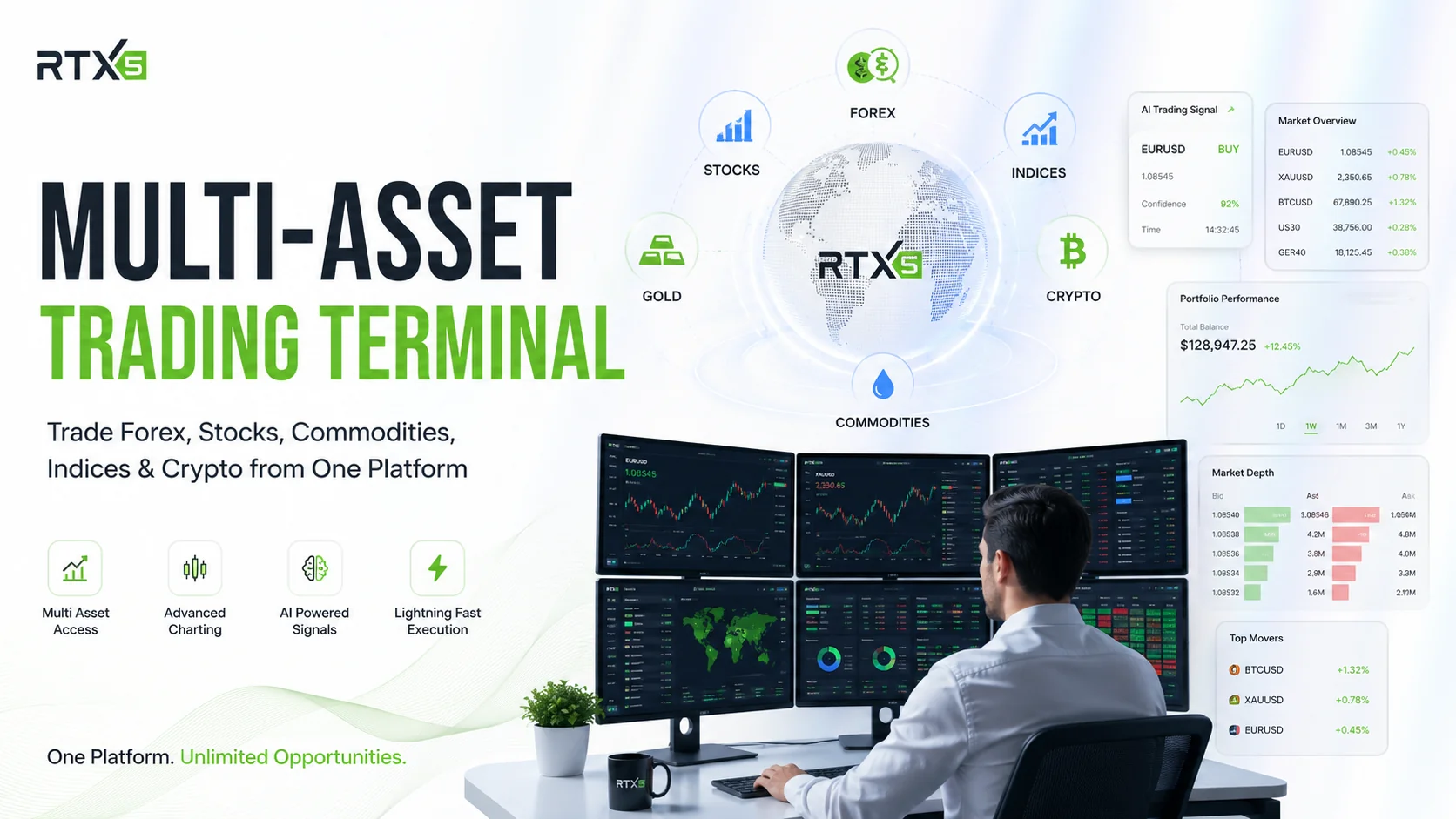
Managing these markets through separate platforms can be time-consuming and inefficient. This is where a multi asset trading terminal becomes invaluable. By providing access to multiple markets within a single interface, traders can streamline operations, improve decision-making, and react faster to changing market conditions.
For intermediate traders managing diverse portfolios, a unified trading environment offers greater visibility, enhanced control, and improved workflow efficiency.
Key Reasons Traders Prefer Multi Asset Platforms
-
Access multiple markets from one dashboard
-
Monitor portfolio performance in real time
-
Reduce platform switching and operational complexity
-
Improve execution speed across asset classes
-
Enhance portfolio diversification opportunities
Understanding the Architecture Behind Multi Market Trading Platforms
A multi market trading platform serves as a centralized hub that connects traders to various financial exchanges and liquidity providers. Instead of maintaining separate systems for stocks, forex, and digital assets, traders can execute and manage trades from a unified workspace.
The platform typically aggregates real-time data feeds, charting tools, order execution systems, and risk management modules into one ecosystem. This allows traders to analyze market correlations and identify opportunities that may otherwise be overlooked.
Modern platforms are designed with flexibility in mind, enabling users to customize layouts, watchlists, alerts, and dashboards according to their trading preferences.
Core Components of a Multi Asset Trading Terminal
-
Real-time market data integration
-
Advanced charting and technical analysis tools
-
Multi-asset order management system
-
Portfolio monitoring dashboard
-
Risk and exposure management modules
-
API connectivity for brokers and exchanges
-
Automated alerts and notifications
These features work together to create a seamless trading experience across multiple asset classes.
How Cross Asset Trading Software Improves Trading Efficiency
One of the biggest advantages of cross asset trading software is operational efficiency. Instead of monitoring multiple platforms and manually consolidating data, traders gain a complete view of their portfolio from a single location.
This unified approach helps traders identify relationships between different markets. For example, movements in commodity prices may influence certain currencies, while stock market sentiment may impact cryptocurrency valuations.
By observing these connections in real time, traders can make more informed decisions and execute strategies with greater confidence.
Major Efficiency Benefits
-
Faster trade execution
-
Centralized portfolio management
-
Reduced administrative workload
-
Better market correlation analysis
-
Improved risk-adjusted decision making
Additionally, traders can set automated alerts for significant market events, ensuring they never miss critical opportunities or risk signals.
Managing Risk More Effectively Across Multiple Markets
Risk management remains one of the most important aspects of successful trading. A multi asset trading terminal helps traders gain a clearer understanding of overall portfolio exposure by consolidating positions across various markets.
Rather than assessing risk separately for stocks, forex, and crypto, traders can view their total exposure in one dashboard. This holistic approach supports smarter capital allocation and helps prevent excessive concentration in correlated assets.
Advanced risk management features often include:
-
Portfolio exposure monitoring
-
Position sizing calculators
-
Margin utilization tracking
-
Stop-loss and take-profit automation
-
Volatility-based risk alerts
-
Real-time profit and loss analysis
These tools enable traders to maintain discipline and protect capital during periods of heightened market volatility.
Trading Stocks, Forex, and Crypto from One Platform
The ability to access multiple asset classes through a single platform has become increasingly valuable in today's interconnected markets. Traders can quickly shift capital between opportunities without the delays associated with transferring funds or switching systems.
For example, during periods of stock market uncertainty, traders may seek opportunities in forex or commodities. Similarly, cryptocurrency markets often operate independently of traditional market hours, providing additional trading opportunities.
A comprehensive stocks forex crypto platform enables traders to:
-
Diversify across different market sectors
-
Capture opportunities around the clock
-
Hedge positions more efficiently
-
Respond faster to global economic events
-
Improve portfolio resilience
This flexibility can significantly enhance a trader's ability to adapt to changing market conditions.
What to Look for When Choosing an All in One Trading Terminal
Not all trading platforms offer the same capabilities. Selecting the right all in one trading terminal requires careful evaluation of features, reliability, and scalability.
Before making a decision, traders should assess whether the platform aligns with their trading style and long-term objectives.
Important Selection Criteria
Asset Coverage
Ensure the platform supports stocks, forex, commodities, indices, and cryptocurrencies if diversification is a priority.
Execution Speed
Low-latency order execution can be critical, especially for active traders.
User Experience
A clean and responsive interface improves productivity and reduces trading errors.
Security Standards
Look for strong encryption, multi-factor authentication, and secure account management features.
Customization Options
The ability to personalize dashboards, layouts, and alerts can greatly enhance workflow efficiency.
Customer Support
Reliable technical support helps minimize disruptions during trading hours.
A well-chosen platform can support growth as trading strategies become more sophisticated over time.
Implementing a Multi Asset Trading Solution Successfully
After selecting a platform, proper implementation is essential. Even the most advanced software requires configuration and optimization to deliver maximum value.
Successful onboarding typically includes:
-
Connecting brokerage and exchange accounts
-
Configuring API integrations
-
Setting risk management parameters
-
Creating watchlists and alerts
-
Customizing chart layouts
-
Testing execution functionality
Traders should also invest time in learning platform-specific features and tools. Familiarity with the system can significantly improve efficiency and reduce operational mistakes.
Regular updates and maintenance help ensure continued access to new market instruments, analytical tools, and security enhancements.
Conclusion
A multi asset trading terminal provides traders with a powerful and efficient way to manage stocks, forex, commodities, and cryptocurrencies from a single interface. By consolidating data, execution, and risk management capabilities, these platforms simplify complex trading operations and improve decision-making.
As financial markets become increasingly interconnected, the demand for sophisticated multi market trading platforms and cross asset trading software continues to grow. Traders who leverage the right all in one trading terminal can gain greater visibility, enhanced flexibility, and stronger control over their portfolios.
Whether your goal is diversification, efficiency, or improved risk management, investing in a comprehensive multi-asset trading solution can help position you for long-term trading success.
Frequently Asked Questions (FAQ)
What is a multi asset trading terminal?
A multi asset trading terminal is a platform that allows traders to access and manage multiple financial markets such as stocks, forex, commodities, indices, and cryptocurrencies from a single interface.
Who should use a multi asset trading platform?
Intermediate and advanced traders who manage diversified portfolios can benefit most from the centralized access and risk management capabilities these platforms provide.
Can I trade stocks, forex, and crypto from one platform?
Yes. Many modern trading terminals offer integrated access to stocks, forex, commodities, and cryptocurrencies through connected brokers and exchanges.
Why is cross asset trading software useful?
Cross asset trading software helps traders analyze market correlations, improve portfolio diversification, and manage risk more effectively across different asset classes.
What features should I prioritize when choosing a platform?
Focus on asset coverage, execution speed, security, charting tools, customization options, and customer support when evaluating trading terminals.
Ready to Simplify Your Trading Experience?
Discover how a professional multi asset trading terminal can help you access global markets, manage risk more effectively, and trade with greater confidence from a single unified platform. Explore advanced trading technology today and take control of stocks, forex, commodities, and crypto trading through one powerful solution.