Introduction:
Starting a trading journey often begins with a demo account. It allows traders to explore market conditions, test strategies, and understand platform functionality without financial exposure.
However, moving from simulated trading to real market participation is one of the most important decisions for any trader.
Many beginners ask:
- How long should they trade on a demo account?
- What skills indicate they are ready for live trading?
- What are the risks of moving too early?
- How can they prepare for real market conditions?
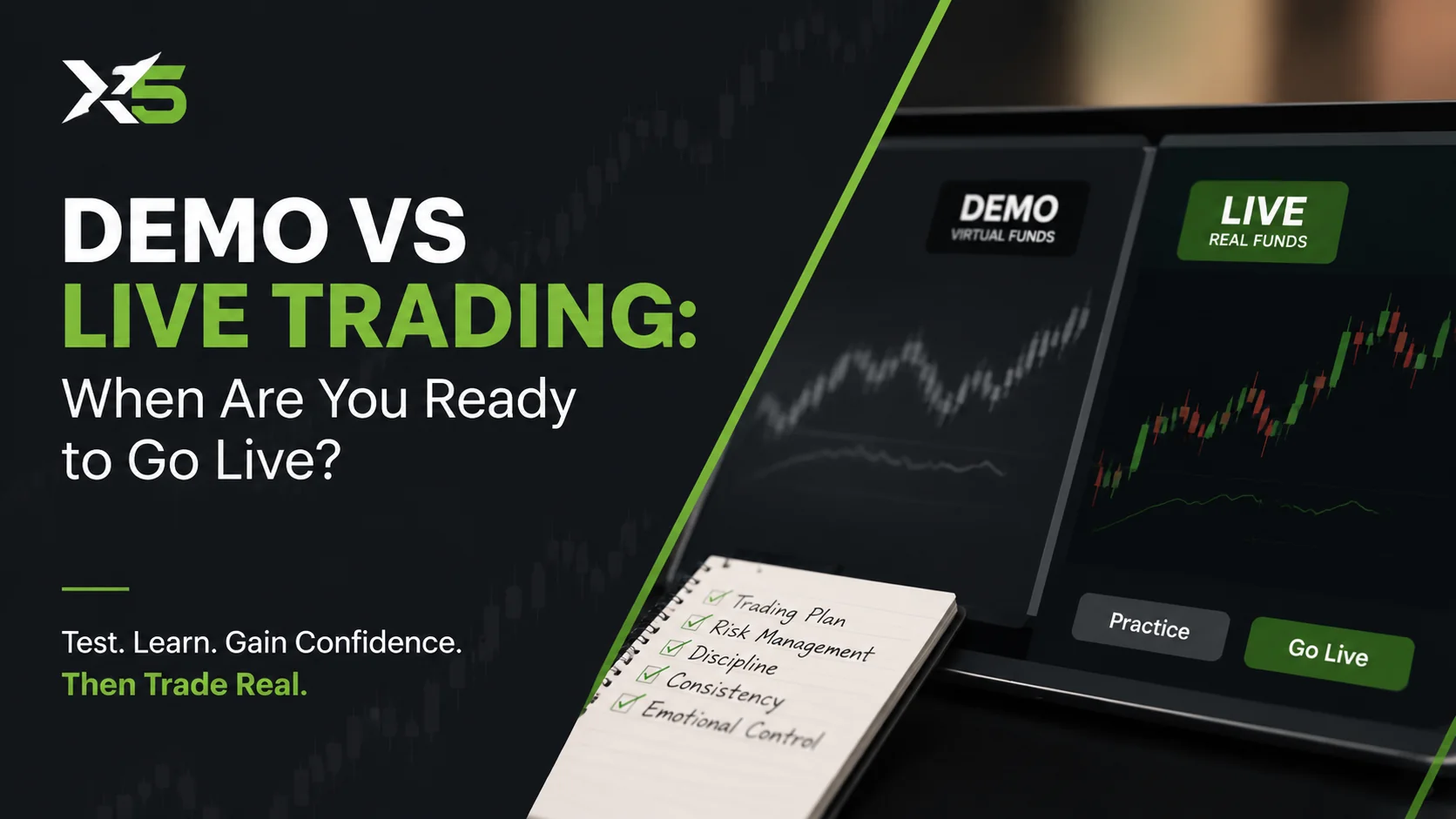
The difference between a demo account and a live trading account is not only about using virtual funds versus real capital. It also involves emotional discipline, risk management, execution behaviour, and decision-making under real market pressure.
This guide explains demo account vs live trading, explores demo trading account benefits, highlights the risks of live trading vs demo, and explains when to switch from demo to live using a structured approach.
Key Takeaways
- Demo accounts help traders understand markets and platform features without financial risk.
- Live trading introduces real emotions, capital management, and execution challenges.
- Successful transition requires consistency, discipline, and proper risk management.
- Traders should evaluate readiness based on skills rather than time spent on a demo account.
- RTX5 provides a professional trading environment designed to support both learning and real-market execution workflows.
Why Demo vs Live Trading Matters for Traders and Brokers
The transition from demo trading to live trading represents a major step in a trader's development.
A demo account creates a controlled learning environment where traders can:
- Understand order execution
- Explore market movements
- Test strategies
- Learn trading tools
However, real trading introduces additional factors that cannot always be replicated in a simulated environment.
Live trading involves:
- Real financial decisions
- Actual market exposure
- Emotional responses
- Real risk management requirements
For brokers and trading platforms, providing a smooth transition between demo and live environments is equally important.
A strong trading infrastructure should allow users to learn, practice, and eventually participate in live markets through a reliable execution system.
RTX5 focuses on providing a professional trading experience where traders can develop their skills while accessing the tools required for real-market participation.
Core Concepts / Models / Types
Demo Trading Account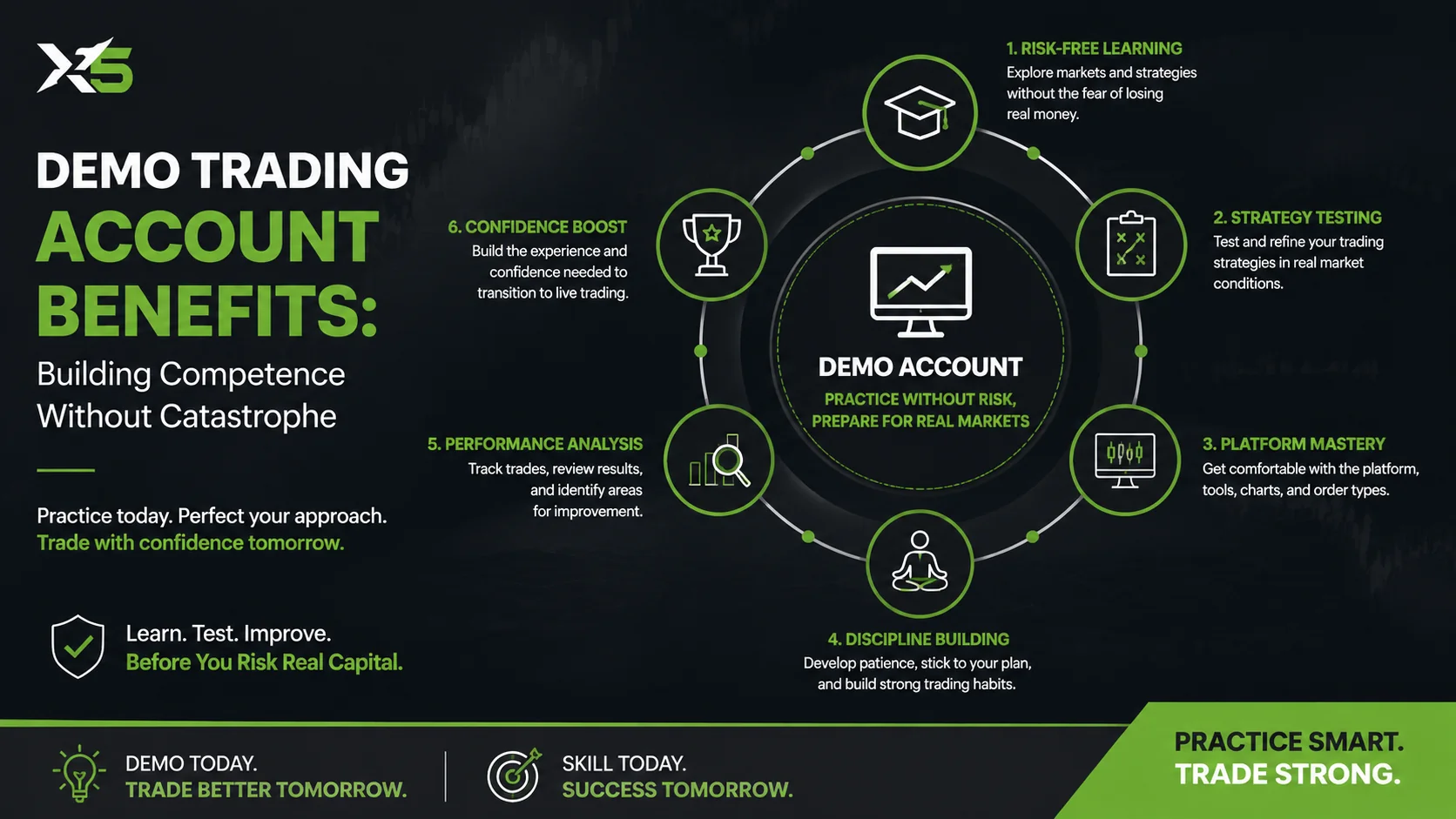
Explanation
A demo trading account allows users to practice trading using simulated funds while experiencing real market conditions.
It is commonly used by beginners who want to understand:
- Trading interfaces
- Market movements
- Order placement
- Risk management techniques
A demo account acts as a learning environment before traders commit real capital.
Benefits
The major demo trading account benefits include:
- Risk-free practice
- Understanding platform functionality
- Testing trading strategies
- Learning order types
- Building confidence
For new traders, demo accounts provide an opportunity to develop trading habits without financial pressure.
Challenges
Although demo accounts are valuable, they have limitations.
The main differences include:
- Lack of emotional pressure
- No real financial consequences
- Different psychological response
A trader who performs well in a demo environment may still face challenges when real money is involved.
Best Practices
To maximise demo account value, traders should:
- Treat virtual funds like real capital
- Follow proper risk management
- Maintain trading records
- Test strategies consistently
A disciplined demo approach creates a stronger foundation for live trading.
Live Trading Account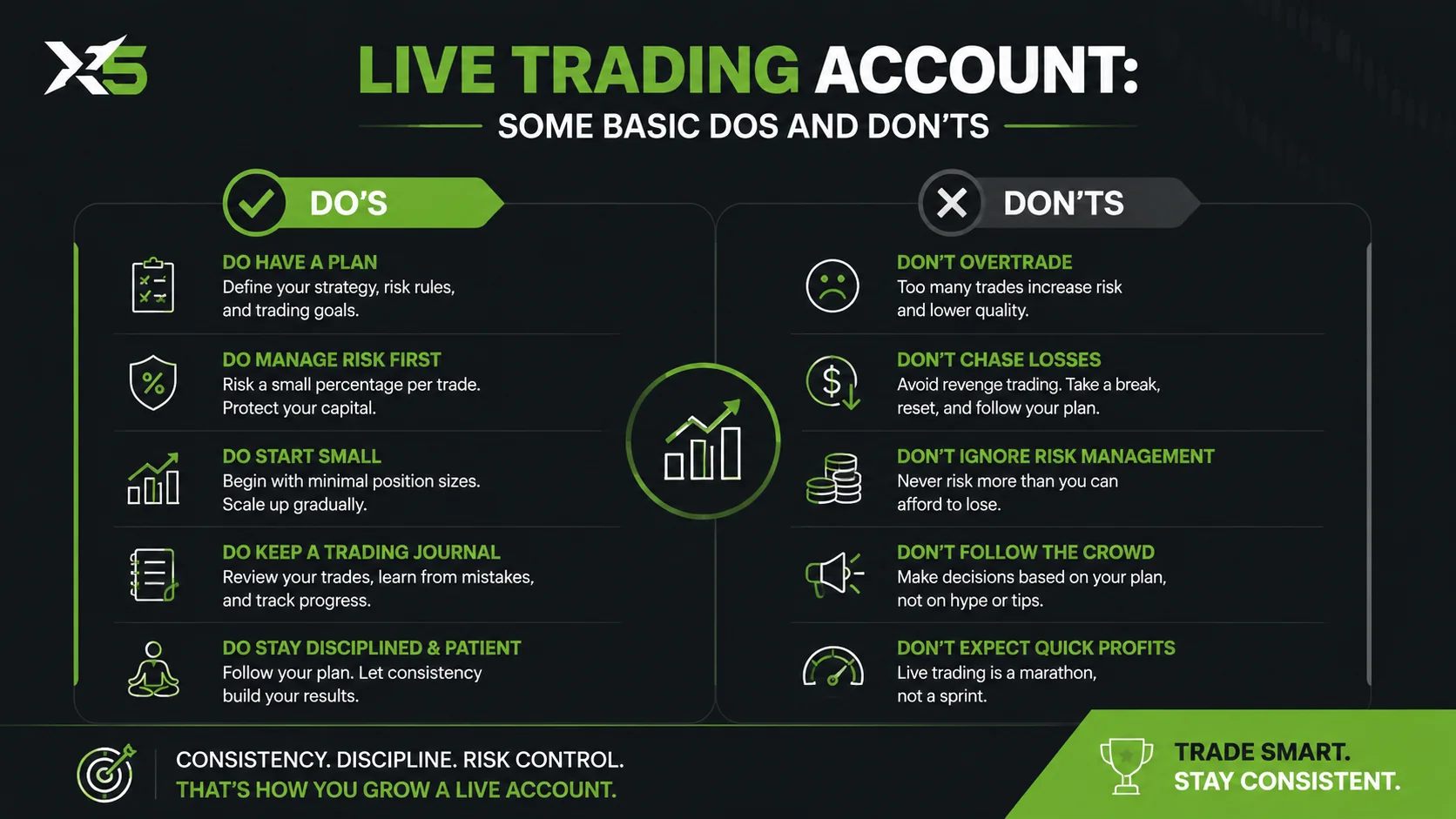
Explanation
A live trading account allows traders to participate in actual markets using real funds.
Unlike demo trading, every decision has a direct financial impact.
Live trading requires traders to manage:
- Position sizes
- Risk exposure
- Trading psychology
- Market uncertainty
Benefits
Live trading provides:
- Real market experience
- Actual execution conditions
- Practical risk management experience
- Deeper understanding of trading behaviour
The experience gained from live markets helps traders improve decision-making over time.
Challenges
The risks of live trading vs demo include:
- Emotional decision-making
- Fear and hesitation
- Overtrading
- Poor risk management
Even traders with strong demo performance may need time to adapt to real-market pressure.
Best Practices
Before going live, traders should:
- Start with manageable risk
- Follow a defined strategy
- Avoid emotional decisions
- Monitor trading performance regularly
When to Switch From Demo to Live
Explanation
There is no fixed timeline for moving from demo trading to live trading.
The right time depends on whether a trader has developed consistent habits.
Indicators of readiness include:
- Understanding market fundamentals
- Maintaining consistent demo performance
- Following risk management rules
- Accepting losses as part of trading
- Understanding platform functionality
The goal is not to eliminate all losses but to build responsible trading behaviour.
Benefits
A structured transition helps traders:
- Reduce unnecessary mistakes
- Build confidence gradually
- Manage expectations
- Develop sustainable trading habits
Challenges
Moving too quickly can result in:
- Poor decision-making
- Excessive risk-taking
- Emotional trading behaviour
A controlled transition is essential.
How to Choose, Evaluate and Implement the Right Trading Transition
Before moving from demo to live trading, traders should evaluate:
Trading Knowledge
Checklist:
- Understand basic market concepts
- Know different order types
- Understand risk and reward
- Follow a trading plan
Strategy Performance
Evaluate:
- Consistency over multiple trades
- Risk management discipline
- Ability to handle losses
- Strategy effectiveness
Platform Familiarity
Ensure understanding of:
- Order placement
- Position monitoring
- Account management
- Trading tools
A familiar platform reduces operational mistakes during live trading.
Industry Trends / Future Outlook
Trading technology is increasingly focused on creating smoother transitions between learning and live execution.
Modern trading platforms are evolving with:
- Better user onboarding
- Advanced analytics
- Improved risk controls
- More intuitive interfaces
- Professional execution infrastructure
For brokers, providing both demo and live environments has become an important part of customer education and retention.
A platform that supports traders throughout their journey can create stronger long-term relationships.
Beginner vs Advanced Use Cases
Beginner Traders
Beginners typically use demo accounts to:
- Learn trading basics
- Understand platform features
- Practice strategies
- Develop confidence
The primary focus is education and preparation.
Advanced Traders
Experienced traders may use demo environments for:
- Testing new strategies
- Evaluating market conditions
- Exploring new instruments
- Refining execution methods
Even advanced users benefit from a controlled testing environment.
Why RTX5 Solution Fits This Need
RTX5 provides a modern trading environment designed to support traders throughout different stages of their trading journey.
The platform enables users to access professional trading capabilities through:
- Efficient order execution
- Multi-asset trading functionality
- Advanced trading workflows
- User-friendly interface
- Reliable trading infrastructure
For beginners, RTX5 provides an environment where they can understand trading processes and develop confidence.
For brokers, RTX5 offers scalable technology that supports both demo and live trading experiences for their clients.
A successful transition from demo to live trading requires more than market access. It requires reliable technology, efficient execution, and a platform built for evolving trader needs.
FAQ
What is the difference between demo account vs live trading?
A demo account uses simulated funds for practice, while live trading involves real capital and actual market exposure.
When should a trader switch from demo to live?
A trader should consider moving to live trading when they demonstrate consistent strategy execution, proper risk management, and confidence with platform tools.
Are demo trading results the same as live trading results?
No. Demo trading removes emotional and financial pressure, while live trading introduces real decision-making challenges.
What are the benefits of a demo trading account?
Demo accounts help traders learn platform features, test strategies, understand markets, and build confidence without financial risk.
What are the risks of live trading compared to demo trading?
Live trading involves real financial exposure, emotional pressure, and potential losses, making risk management essential.
Finally!
RTX5 helps traders and brokers build a more effective trading experience with modern infrastructure, flexible execution tools, and professional trading capabilities.
Whether practising strategies or entering live markets, the right technology creates a stronger foundation for long-term trading success.